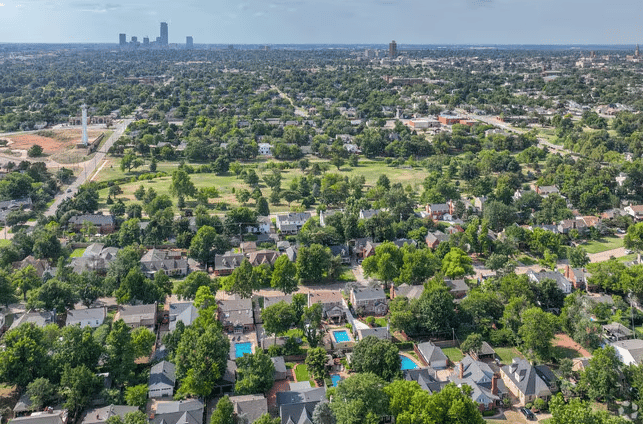
Sellers in Moore have spent a decade preparing for the wrong conversation. They patch the roof, disclose the storm shelter, brace for a buyer who wants to talk about the 2013 tornado. What actually stalls a 2026 closing in Moore rarely starts there. It starts with an insurance underwriter looking at a roof that passed the home inspection and deciding not to write a new policy on it, which means no lender will fund the loan, which means a deal that looked finished three weeks ago is suddenly back on the market.
That gap between "the house is fine" and "the house is insurable" is where Moore sales are actually getting caught in 2026. It has nothing to do with whether the seller disclosed anything wrong. It has to do with how Oklahoma's insurance market has quietly rebuilt itself around roof age, and almost no one preparing to list a home in Moore has been told about it.
Why Moore Roofs Draw a Second Look
Moore sits inside Cleveland County in a corridor the National Weather Service office in Norman tracks closely every spring, and the hail record backs up why. Within 10 miles of the city center, storm trackers have logged 354 hail reports since 2004, including a 4-inch, grapefruit-size stone roughly 16 years ago. Through the first half of 2026, the area had already logged 14 hail reports for the year, the most recent tracked event on May 8 measuring 1.5 inches, or ping pong ball size, with zip code 73135 recording the most damaging hits.
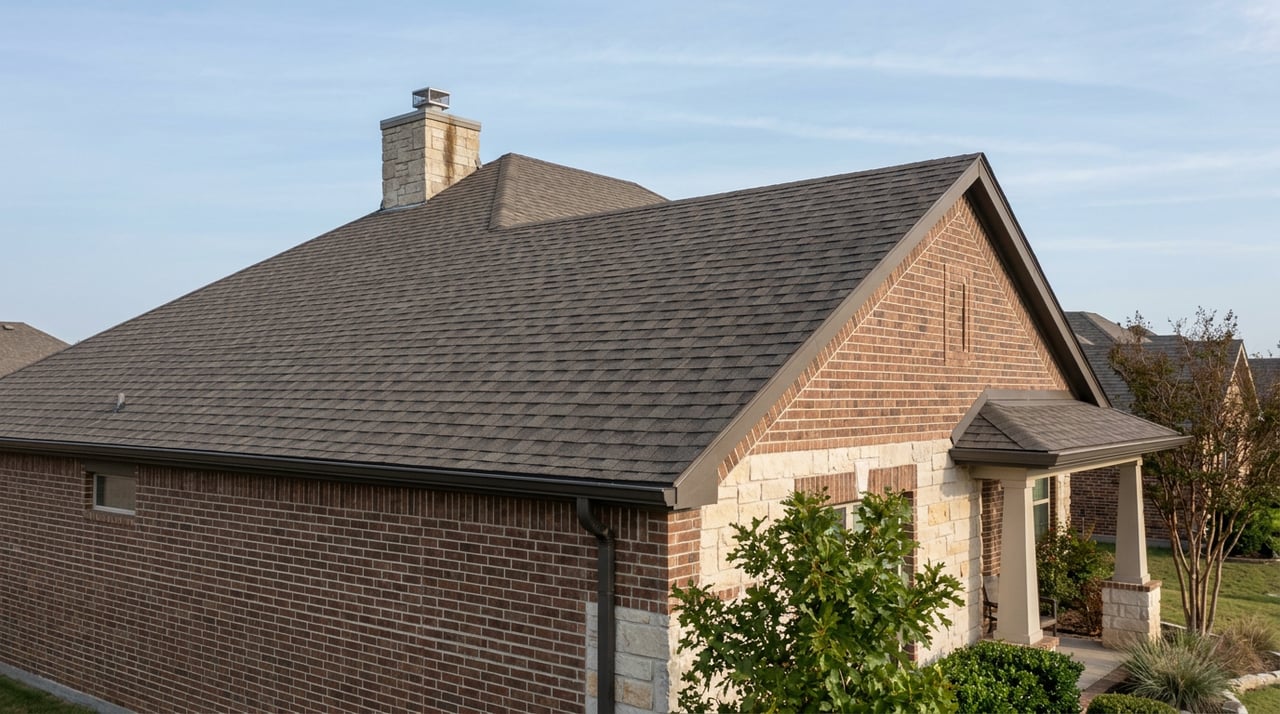
Moore's dominant roofing material is architectural asphalt shingle, and that material typically stops functioning as protection once hail reaches about 1 inch, a size this corridor sees most years. Peak hail season here runs April through June, with May historically producing the most damaging large-hail events. None of that is new information to anyone who has lived through the 1999 and 2013 tornadoes. What is new is how an insurer reads that same roof when a buyer applies for a fresh policy at closing.
The Quiet Shift Nobody Explains at the Closing Table
Homeowners insurance in Oklahoma has moved further than most states toward paying roof claims at depreciated value instead of full replacement cost. A 2026 analysis of insurance regulatory filings by ZestyAI found that 85 percent of carriers writing policies in Oklahoma now use Actual Cash Value settlement schedules for roofs, the highest adoption rate in the country, and 95 percent use percentage based wind and hail deductibles rather than a flat dollar figure, second only to Texas. Oklahoma homeowners now pay an average of $7,255 a year for coverage, also the highest in the country.
What that means in practice is simple and easy to miss. Two roofs that look identical from the street can generate very different payouts depending on age, because Actual Cash Value subtracts depreciation before the check is written. It also means a buyer's percentage deductible is calculated against the dwelling coverage limit, not a fixed number, so a $200,000 home can carry a $2,000 to $4,000 deductible rather than the flat $500 or $1,000 many buyers still expect. A seller who never filed a claim on a hail-bruised roof because the damage looked cosmetic may be handing the next owner a roof that a new carrier prices, or refuses to price, very differently than the seller's own long-standing policy did.
What Changed in Oklahoma This Year, and What Didn't
This is the part that actually matters for a Moore listing right now. In December 2025, Oklahoma Insurance Commissioner Glen Mulready announced a legislative package built around consumer protection after years of rising premiums and claim disputes. Insurance Commissioner Glen Mulready framed the goal directly.
"Oklahomans deserve an insurance market that is transparent, responsive, and accountable."
The package proposed barring insurers from non-renewing, refusing to issue, or reducing coverage solely because a roof is 15 years or older, with homeowners able to pay for an independent inspection to appeal an age-based determination. Lawmakers acted on a broader insurance overhaul this spring: House Bill 3781 passed in May 2026 and changed how Oklahoma regulates the insurance market, though it remains unclear whether the specific roof-age protections made it into final law, and a promised investigative report into how carriers have been handling roof claims still had not been released as of this month. What has definitely taken effect is narrower but real. Oklahoma Insurance Department Bulletin 2026-02, issued in July 2026, now requires insurers to give a full 60 days' notice, up from a shorter window, before cancelling or non-renewing a homeowners policy, effective July 25, 2026.
Here is the gap that matters for a sale specifically. Protections built around non-renewal and appeal rights are written for the homeowner who already has a policy in force. They do not obligate a carrier to originate a brand new policy for an incoming buyer on the same terms. A seller can be fully protected on their existing coverage and still watch a buyer's lender scramble when that buyer's chosen carrier declines to write a fresh policy on the same roof, because new-business underwriting and renewal protection are not governed by the same rule.
Roof Age at a Glance
| Roof age | What it typically triggers with an Oklahoma carrier | What it means for a Moore sale |
|---|---|---|
| Under 10 years | Usually eligible for full Replacement Cost Value coverage | Cleanest path to a fast insurance binder for the buyer |
| 10 to 15 years | Many carriers begin applying depreciation schedules even on undamaged roofs | Worth documenting install date now, before a buyer's underwriter asks |
| 15 to 20 years | Non-renewal protections may apply to an existing policy, but new-business underwriting is stricter | A new buyer's carrier may require an independent inspection before binding |
| Over 20 years | Frequently settled at Actual Cash Value if a claim is ever filed | Highest risk of a stalled binder; a pre-listing roof certification is the strongest lever a seller has |
The Storm Shelter Math, Recalculated
Storm shelters still matter here, just not for the reason most guides lead with. Industry ROI modeling built specifically around a $250,000 home in Moore shows that a $6,000 above-ground garage shelter can add roughly $12,500 in value in a high-risk market like this one, an ROI north of 100 percent, compared to a single-digit return in a moderate-risk area. Homeowners in Oklahoma who install a shelter meeting FEMA guidance and ICC 500 standards can also see a 10 to 20 percent annual discount on their premium, worth $150 to $300 a year on a typical policy.
That math is real, but it solves a different problem than the roof does. A certified shelter helps marketability and shaves a real number off the buyer's future premium. It does nothing to change whether a 22-year-old roof clears underwriting. Sellers who treat the shelter as their one storm-related selling point are answering a question buyers stopped asking years ago, while leaving the actual gatekeeper, the roof, undocumented.
What to Do Before You List
Moore's own building code creates a documentation problem worth knowing about directly. The city requires an inspection for all roof repairs but does not require a permit for minor patch work below certain damage thresholds, which means a roof that has been patched two or three times over the years may have no dated public record a buyer's insurer can pull to confirm its age or condition. That absence of a paper trail is exactly what triggers a carrier to ask for an independent inspection before binding a new policy, which adds time a closing timeline may not have.
A seller preparing to list in neighborhoods from Westmoor to Regency Park to Lake Woods to Oakridge-Southmoore can close that gap before it becomes a problem. Pull whatever permit or contractor invoice exists showing the roof's install or last full replacement date. If none exists, get a written roof inspection now, not after an offer comes in, so a prospective buyer's carrier has something dated to work from instead of guessing. If the roof is approaching the 15 to 20 year range, ask whether Class 4 impact-resistant shingles make sense at replacement, since Moore-area insurers offer discounts of roughly 10 to 20 percent for that upgrade even though the city does not require it.
A Short FAQ
Does a storm shelter guarantee a lower insurance quote for a buyer? No single feature guarantees a rate, but a shelter certified to FEMA and ICC 500 standards is the kind of documented, verifiable upgrade carriers reward, typically in the 10 to 20 percent range on premium.
If my current policy is protected under the 2026 rules, does that protect my buyer too? Not automatically. The confirmed 2026 change, a longer 60-day non-renewal notice, applies to policies already in force. A buyer's carrier is underwriting a brand new policy and can still require its own inspection before binding, regardless of what protections apply to the seller's existing coverage.
What roof age tends to slow things down in Moore specifically? Underwriting scrutiny generally increases in the 15 to 20 year range, the same window state lawmakers targeted in the 2026 legislative package aimed at non-renewals, which is a signal worth taking seriously rather than a coincidence.
If you are getting a Moore home ready to list this fall, the roof conversation is worth having before a buyer's lender forces it. Legacy Real Estate Group works these neighborhoods every week and can walk you through what documentation actually moves a closing forward. Get your free home valuation or start your search today.